
Needs get lost
Decisions from workshops disappear into minutes, slide decks, and disconnected spreadsheets.
Project Briefing before design starts
Define usage scenarios, connect them to proven room types, publish one professional room programme and project brief, and get BIM requirements as a byproduct.
Open standard. Git-style traceability. Ready for people, software, and AI.
Live result
At the entrance
The problem
Static spreadsheets record areas, but they rarely explain how people use a building or why a room is needed.
Decisions from workshops disappear into minutes, slide decks, and disconnected spreadsheets.
Design teams receive names and areas without the scenarios, relationships, and constraints behind them.
Overwritten files make it difficult to prove who changed a requirement, when it changed, and why.
Interactive example
Built as data
Requirements use an open, machine-readable structure instead of being trapped in one document or application.
Git-style commits record who changed what and why. Published versions remain fixed and reviewable.
Structured requirements and known version history give AI reliable context for comparison, generation, and review.
BriefBuilder and pragmaticBIM both support structured briefing. pragmaticBIM makes the published requirements an open, versioned source of truth that continues into BIM and automated validation.
How it works
Start with intent, make the spatial consequences visible, and hand over a controlled version.
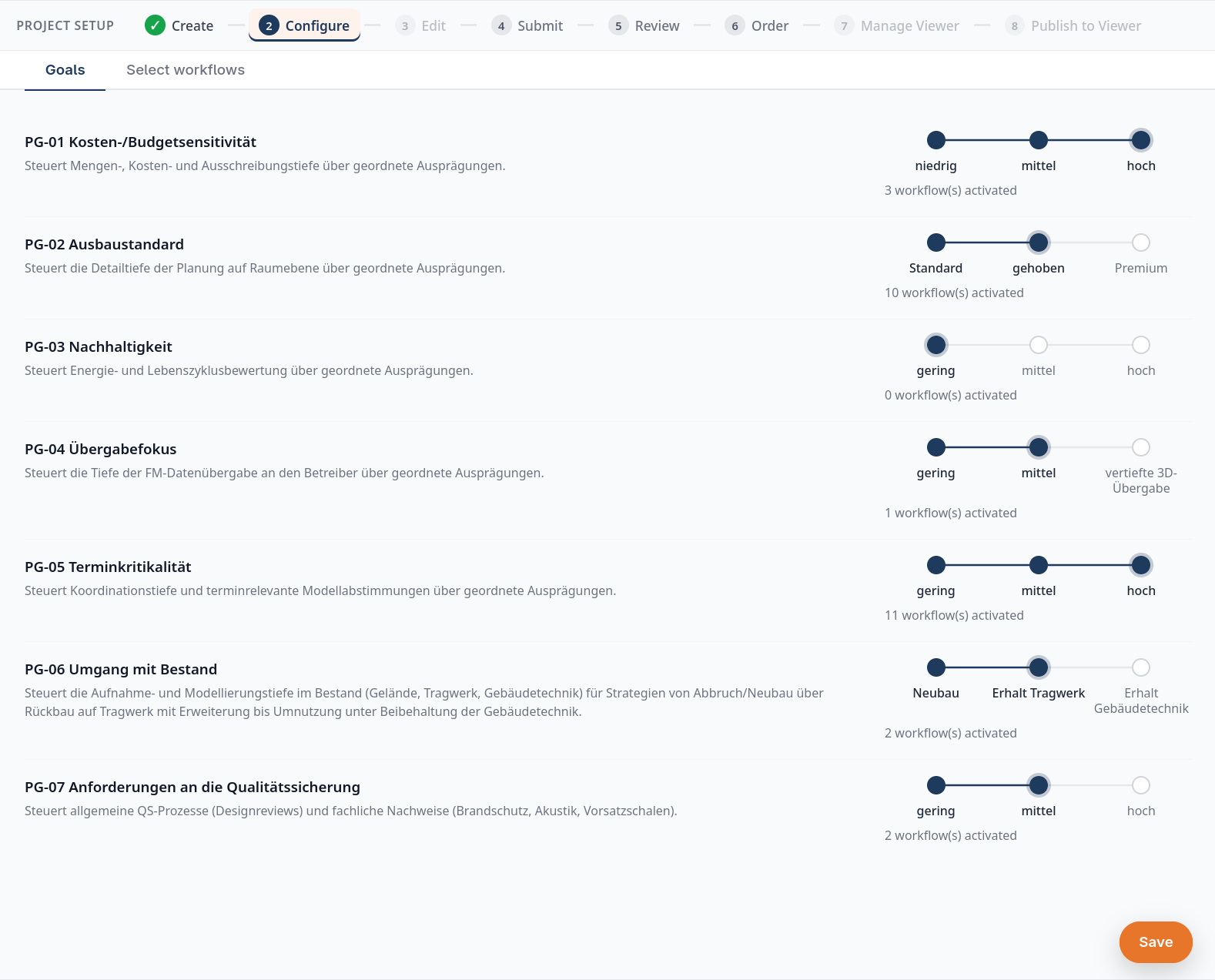
01
Select the outcomes the project must support and choose relevant usage scenarios from templates.

02
Reuse predefined room types, adapt quantities and relationships, and see which spaces each scenario requires.
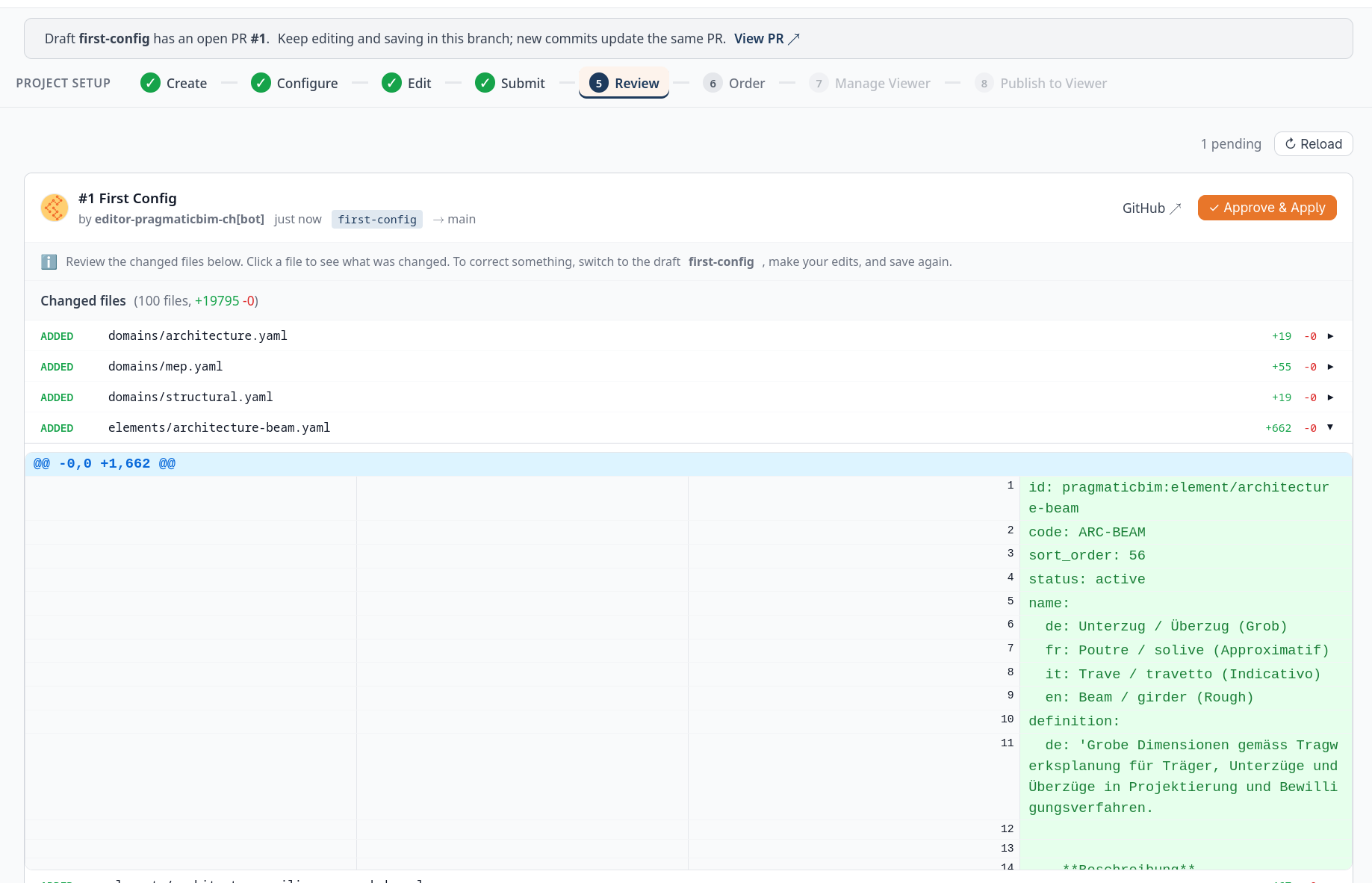
03
Agree changes through a versioned review and publish a stable project brief for the design team.
Simple add-on pricing
Add Project Briefing when the room programme and project brief are ready to become a controlled project deliverable.
Usage scenarios and room types define what the project must deliver. pragmaticBIM carries those decisions into model specifications and IDS, so BIM requirements become a byproduct of the project brief instead of a separate exercise.
The price covers one published project for one year. Configuration is free until publication is ordered.
Both support structured project briefing. pragmaticBIM uses an open, machine-readable standard and Git-style versioning, so every published requirement has traceable authorship and history and can continue into BIM validation.
AI works best with structured context and known provenance. Fixed versions and explicit changes make it possible to compare, generate, and review requirements without losing which source was agreed.
Configure the scenarios and room programme free. Order publication only when the project brief is ready.