
Guides for building owners
Why Building Owners Should Not Order BIM Use Cases (And What You Need Instead)
BIM Without Bullshit — The Restaurant Principle for Swiss Clients
Published
If you build a building, you don't walk into the restaurant kitchen to tell the chef how to stir the sauce. So why do we keep doing exactly that in digital construction?
Many Swiss building owners, asset managers, and project leaders face the same problem: they want to "do BIM", copy page after page of BIM execution plan (BAP) templates, and order countless standard use cases like "clash detection" or "quantity takeoff".
The result? Overwhelmed planners, astronomical fees, and ultimately a data graveyard that is useless for operating the property.
It is time for BIM without bullshit. It is time to return to the old commissioning principle that still applies in the digital age: the client orders the what—the planner delivers the how.
The Restaurant Principle: Why the Method Belongs to the Specialist
When a patient needs surgery, they don't tell the surgeon: "Operate on me, but you must use scalpel XY and may not touch the modern surgical robot." That would be absurd.
Yet that happens every day when commissioning BIM services. Building owners mutate into micro-managers of planner processes. Flip the principle:
- The building owner states what they want and need—and ideally why, to secure quality.
- The specialist states how they will do the job.
When you dine out, you order a perfectly cooked, gluten-free fillet (your benefit and constraint). You trust the chef to know their craft. Only when the plate arrives do you verify the result (quality assurance).
The 2 Homework Items for Swiss Building Owners: Processes and Data Requirements
Forget the complicated, theoretical BIM processes consultants try to sell you. As the client, focus on your own homework:
1. Define your own processes (your internal use cases)
Planner BIM is not owner BIM. Don't ask what the architect does with the model—ask what you will do with the data:
- Do you need the data for seamless CAFM handover (facility management)?
- Must you run automated cost and area calculations per SIA 416 / DIN 277?
- Do you need exact material data for later circular-economy reporting (Madaster)?
2. Formulate concrete Employer's / Exchange Information Requirements (EIR)
Instead of prescribing how the planner checks clashes, define which data quality must be present at the end of each SIA phase.
A bad BIM commission: "The planner must apply the BIM use case clash detection for building services."
A pragmatic BIM commission: "I need all MEP components in the Phase 32 (construction project) model geometrically and attributively classified so that no hard penetrations with the load-bearing structure remain. The final IFC delivery must include attribute X."
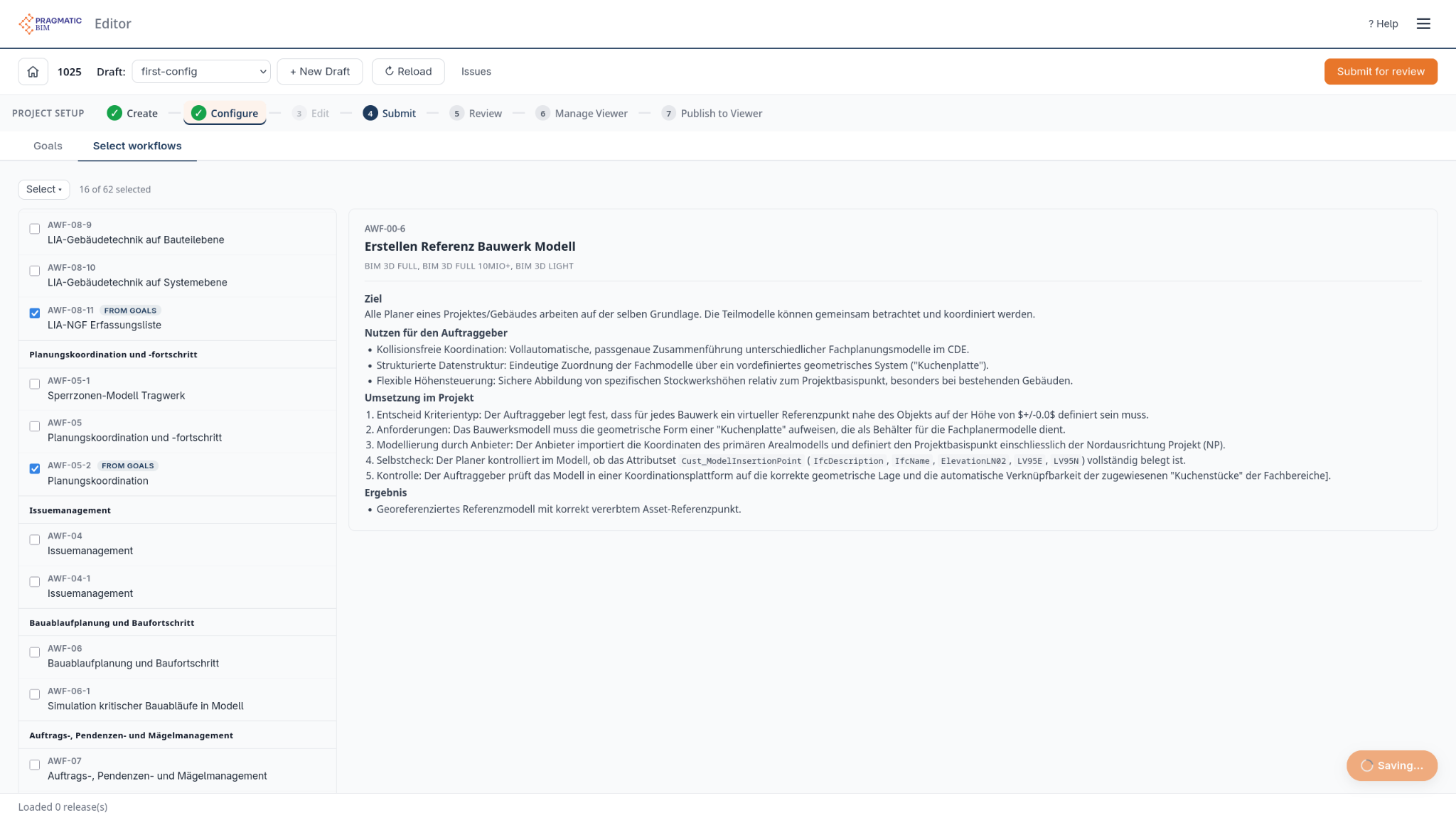
Trust Is Good, Quality Verification Is Better
The restaurant principle does not mean you must swallow everything blindly. For an important meal, you legitimately peek into the kitchen and want freshness certificates for the ingredients.
Translated to BIM: focus on automated quality assurance. Planners may use the software and methods they master. But you, as the building owner, install a digital check routine (e.g. automated model checks) that verifies on upload whether your required data was delivered. If the ingredients don't match, the plate goes back to the kitchen.
Conclusion: Fewer Documents, More Client Competence
Stop ordering use cases you don't understand and cannot control. Strengthen your commissioning competence by learning to formulate precise functional requirements.
Want to know how to set up your Employer's / Exchange Information Requirements (EIR) for the next project so planners breathe easier and you get exactly the data you need?